

Health officials in Virginia are warning residents to stay alert after a confirmed measles case was reported in Lynchburg earlier this week, potentially exposing people at a local hospital emergency department.
According to the Virginia Department of Health (VDH), the case involves a patient from another state who had recently traveled internationally before arriving in Virginia. To protect the patient’s privacy, officials say they are not releasing additional identifying details.
However, health investigators are working quickly to track potential exposure after the individual visited the Centra Lynchburg General Hospital Emergency Department.
Possible Exposure Location
VDH says anyone who was at the following location during the specified time may have been exposed:
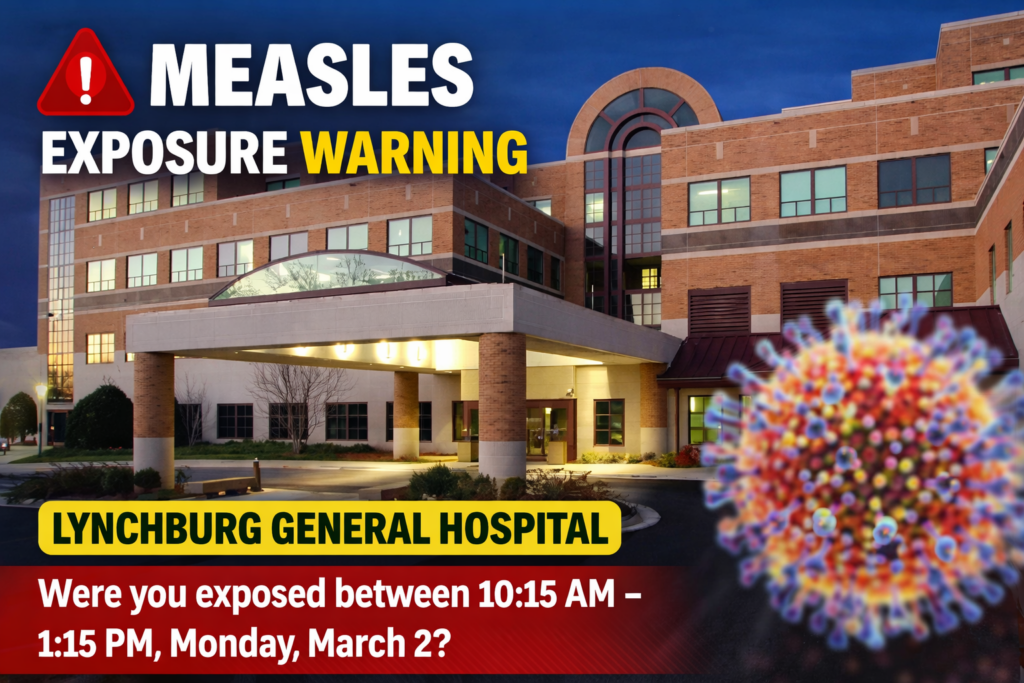
Centra Lynchburg General Hospital Emergency Department
1901 Tate Spring Road, Lynchburg
Monday, March 2 — between 10:15 a.m. and 1:15 p.m.
Health officials are asking anyone who was present during that time to monitor their health closely and take several precautionary steps.
What To Do If You Were There
VDH recommends the following actions for people who may have been exposed:
- Report the exposure by completing a health department survey
- Check your vaccination records through the VDH Record Request Portal
- Contact your healthcare provider or local health department if you are not fully vaccinated
- Monitor for symptoms for 21 days after exposure
- If symptoms appear, stay home and isolate immediately
Officials say the most likely timeframe for symptoms to appear is between March 9 and March 23.
Symptoms To Watch For
Measles symptoms usually appear in two stages.
The first stage often includes:
- Fever above 101°F
- Runny nose
- Red, watery eyes
- Persistent cough
A few days later, a distinctive red rash typically begins on the face and spreads across the body.
People infected with measles are considered contagious four days before the rash appears and up to four days afterward, which is one reason the disease spreads so easily.
Why Health Officials Take Measles Seriously
Measles is one of the most contagious viruses known, spreading through coughing, sneezing, or even breathing shared air in an enclosed space.
The virus can remain active in the air for up to two hours after an infected person leaves the area, meaning people who enter the same room later could still be exposed.
Despite its contagious nature, health officials say most Virginians are protected through vaccination.
According to VDH, about 95% of kindergarten students in Virginia are fully vaccinated with the MMR vaccine, which protects against measles, mumps, and rubella. Two doses of the vaccine typically provide lifelong protection.
However, certain groups remain vulnerable, including:
- Infants too young to receive the vaccine
- People who are not vaccinated
- Individuals with weakened immune systems
Measles Cases in Virginia
Virginia has recorded 10 measles cases so far in 2026, according to state health officials. While that number remains relatively small, health departments continue monitoring cases closely to prevent outbreaks.
A Growing Global Concern
The situation in Virginia also comes amid a growing measles resurgence globally.
Public health organizations have reported rising cases in several regions, including parts of Europe, Asia, and Africa, largely tied to declining vaccination rates and increased international travel.
According to global health agencies, measles cases worldwide have surged in recent years after pandemic disruptions caused many children to miss routine vaccinations.
Health experts warn that even in countries where measles was once nearly eliminated, imported cases can quickly spark outbreaks if vaccination coverage drops.
Because measles spreads so easily, just one infected traveler can potentially expose dozens of people in airports, hospitals, or crowded public places.
Vaccination Remains the Best Protection
Health officials emphasize that measles is entirely preventable through vaccination.
The MMR vaccine is given in two doses during childhood and provides about 97% protection against the virus.
For families planning international travel, VDH also recommends that infants aged 6–11 months receive an early dose of the vaccine before traveling abroad, where measles exposure may be more likely.
For now, Virginia health officials say the risk to the general public remains low—but they encourage anyone who may have been at the Lynchburg hospital during the exposure window to stay vigilant and monitor for symptoms.