


There’s a quiet warning coming out of Washington that could eventually hit every mailbox in America.
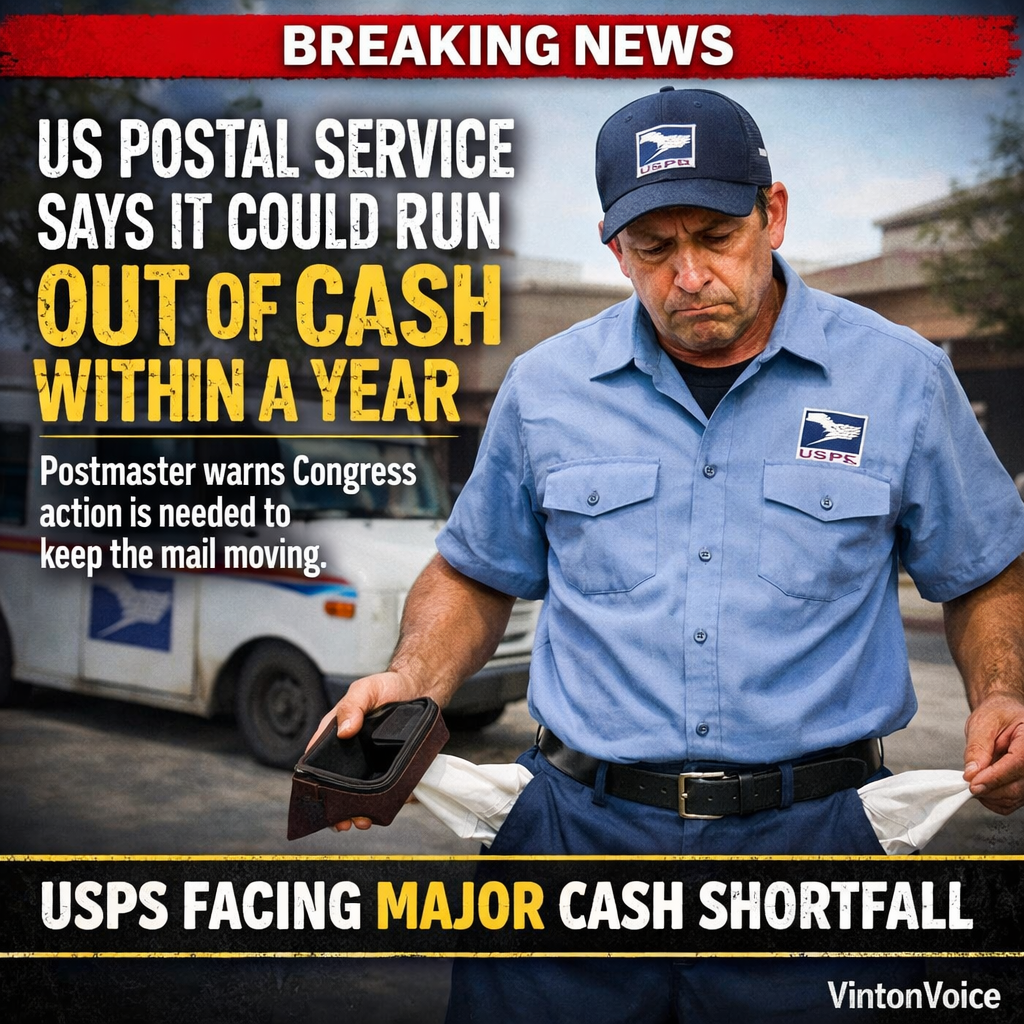
According to the U.S. Postal Service’s new postmaster general, the agency could run out of cash within a year if Congress doesn’t step in and loosen some long-standing financial restrictions. If nothing changes, the Postal Service could find itself in the uncomfortable position of not being able to pay employees or vendors by early 2027.
And yes — that would be a big problem for anyone who still expects mail to show up six days a week.
Postmaster General David Steiner, who stepped into the role last summer, says the biggest issue is a borrowing cap that dates back to 1990. The Postal Service can only borrow up to $15 billion, and it’s already brushing up against that ceiling.
Steiner says lifting that cap would buy the agency time to figure out longer-term fixes.
“How long are employees going to work and vendors going to show up if we’re not paying them?” he asked bluntly in an interview this week.
A Service Everyone Uses — But No One Funds
The Postal Service sits in a strange position. It’s technically a government agency, but it doesn’t get the kind of annual taxpayer funding most federal departments rely on. Instead, it’s expected to survive mostly off postage and shipping services.
At the same time, federal rules still require USPS to deliver mail to every address in the country, six days a week, whether that address is a Manhattan high-rise or a cabin at the end of a dirt road.
That’s not exactly a cheap operation.
Steiner says the system works — but only if the revenue keeps up.
“If Americans want delivery everywhere, every day, we can do that,” he said. “But someone has to pay for it.”
Billions Lost as Mail Volume Collapses
One of the biggest problems isn’t mismanagement — it’s math.
Traditional mail has dropped dramatically over the last two decades as people moved bills, banking, and communication online. The Postal Service used to handle around 220 billion pieces of mail a year. Today that number has been cut roughly in half.
That lost volume translates into massive lost revenue.
Even with growth in package shipping, the agency still reported $9 billion in losses in 2025, following $9.5 billion in losses in 2024.
To put the shift into perspective, Steiner says the Postal Service effectively lost the equivalent of $86 billion in annual revenue as mail volume declined over the years.
“If FedEx or UPS lost that kind of revenue,” he said, “they wouldn’t have any revenue left.”
Stamp Prices Could Be Part of the Fix
One proposal being floated is a simple one — raise the price of stamps.
Right now, a first-class stamp costs 78 cents. Steiner believes pushing that price closer to 95 cents would go a long way toward stabilizing the agency’s finances.
But even that isn’t fully in USPS’s control.
The Postal Regulatory Commission, an independent federal watchdog, oversees postage rate changes and has pushed back on some pricing proposals from the Postal Service.
What Happens Next
Steiner is scheduled to testify before Congress later this month, where lawmakers will likely hear a familiar message: the Postal Service needs more flexibility to survive in a world where email and online billing replaced half the mail.
There have been some reforms in recent years. In 2022, Congress removed a requirement that forced USPS to pre-fund decades of retiree health benefits — a rule critics said placed an enormous financial burden on the agency.
But other restrictions remain, and Steiner says they’re part of the reason the Postal Service keeps sinking deeper into the red.
His comparison of the situation was pretty blunt.
“We got thrown overboard into cold water,” he said. “And instead of someone throwing us a life preserver, they threw us an anchor.”
For now, the mail is still running. But unless Congress changes course soon, the agency responsible for delivering letters, checks, packages — and the occasional birthday card — could find itself running out of money sometime next year.
And that’s a conversation Washington may not be able to ignore much longer.