

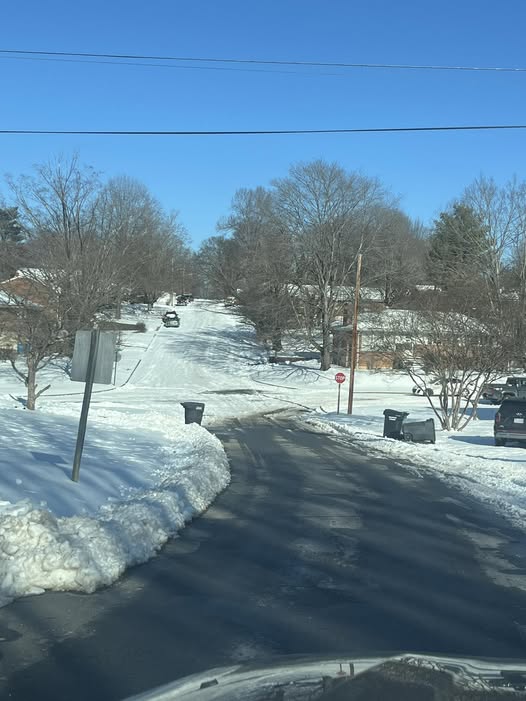
As Roanoke and the surrounding region continue to recover from a severe winter storm that brought a mix of snow, ice, and prolonged sub-freezing temperatures, many Roanoke City residents are expressing growing frustration over the condition of city streets, especially when compared to neighboring Roanoke County.
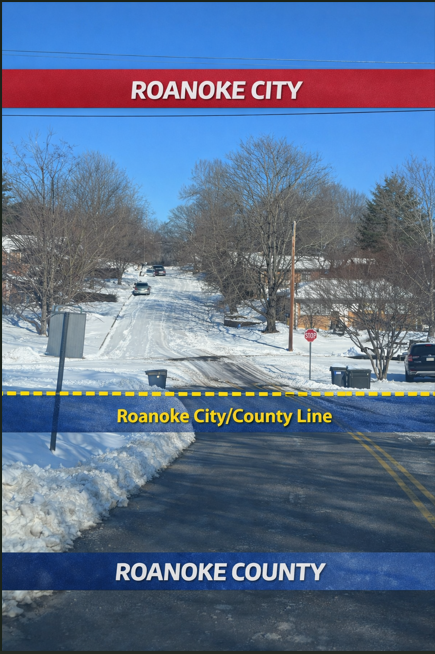
A recently shared image circulating on social media highlights the contrast clearly:
on one side of the road, Roanoke County streets appear largely cleared and passable, while just yards away, Roanoke City roads remain snow- and ice-covered. The visual difference has sparked widespread discussion online, with residents questioning why conditions differ so dramatically across the city-county line.
Social Media Reaction Grows
Over the past several days, Roanoke City residents have taken to social media in large numbers, sharing photos, videos, and firsthand accounts of slick neighborhood streets, icy hills, and roads that remain difficult to navigate. Many posts compare conditions directly with Roanoke County, where secondary roads in some areas appear more thoroughly cleared.
While not all county roads are in perfect condition, many residents acknowledge that Roanoke County appears to have made greater progress overall in snow and ice removal.
Why This Storm Is Different
Officials and weather experts note that this storm was not a typical snow event. Instead, the region experienced snow followed by freezing rain, ice accumulation, and days of sustained cold temperatures. This combination created a thick, compacted layer of ice and snow that is extremely difficult for plows to remove.
When snow is driven over by vehicles and then freezes solid, it essentially bonds to the pavement. Plow blades often cannot scrape this layer away without damaging roads, and salt becomes far less effective when temperatures drop well below freezing.
What Actually Works on Ice-Packed Roads
In conditions like these, experts say the most effective methods include:
- Pre-treatment before storms, which wasn’t always possible due to rapid temperature drops
- Repeated scraping once temperatures rise slightly
- Sand or gravel to improve traction when melting isn’t possible
- Time and sunlight, which help break the bond between ice and pavement
Unfortunately, when temperatures remain in the teens or single digits, even heavy salting may have limited impact.
City vs. County: Different Approaches, Same Storm
Roanoke City and Roanoke County operate separate public works departments with different equipment, staffing levels, road priorities, and strategies. County roads often include wider routes and different plowing schedules, which may partially explain the difference residents are seeing.
That said, many city residents feel the contrast is too stark to ignore and are calling for greater transparency and communication from city officials about snow removal efforts, limitations, and timelines.
Looking Ahead
With more winter weather possible and many streets still icy, residents are urged to avoid unnecessary travel, especially on hills and untreated neighborhood roads.
While frustration is high, most residents also acknowledge the challenging and dangerous conditions crews have been working in and recognize that this storm pushed infrastructure to its limits.
Still, as the image making rounds online shows, the difference between Roanoke City and Roanoke County road conditions is hard to miss — and it’s fueling an ongoing conversation about preparedness, response, and what residents expect during severe winter weather.