

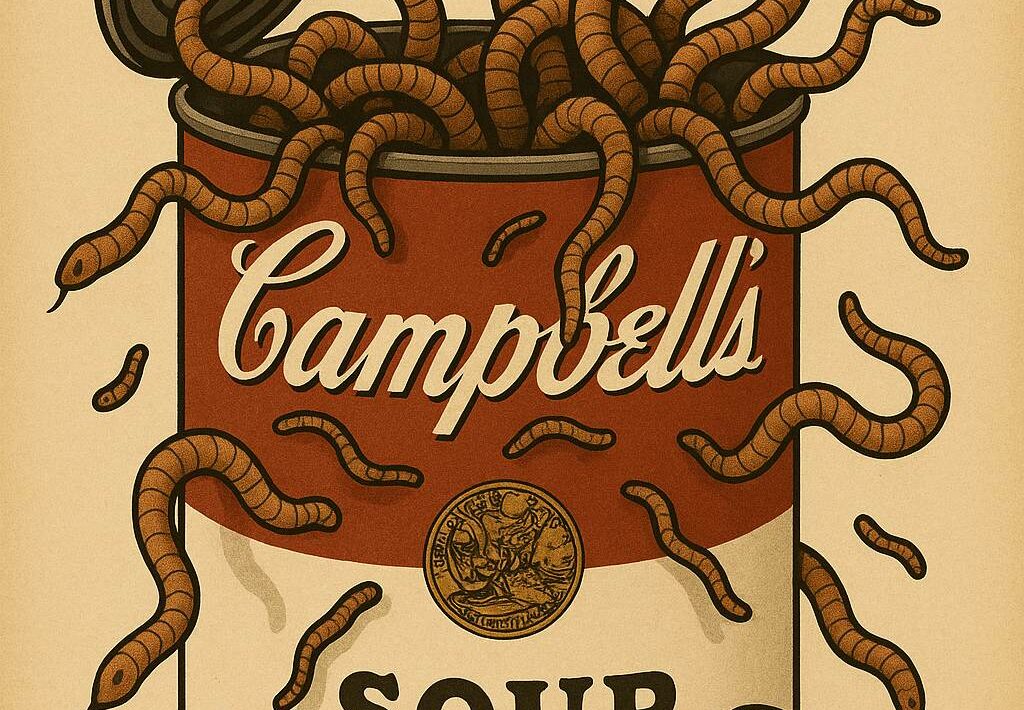
A growing corporate firestorm is unfolding at The Campbell’s Company after explosive allegations surfaced against one of its top executives — and the damage may already be done.
On Tuesday, Campbell’s confirmed that Martin Bally, the company’s vice president of information technology, has been placed on leave while the company investigates claims that he made racist comments, disparaged the company’s customers, and even mocked the food sold under one of America’s most recognizable brands.
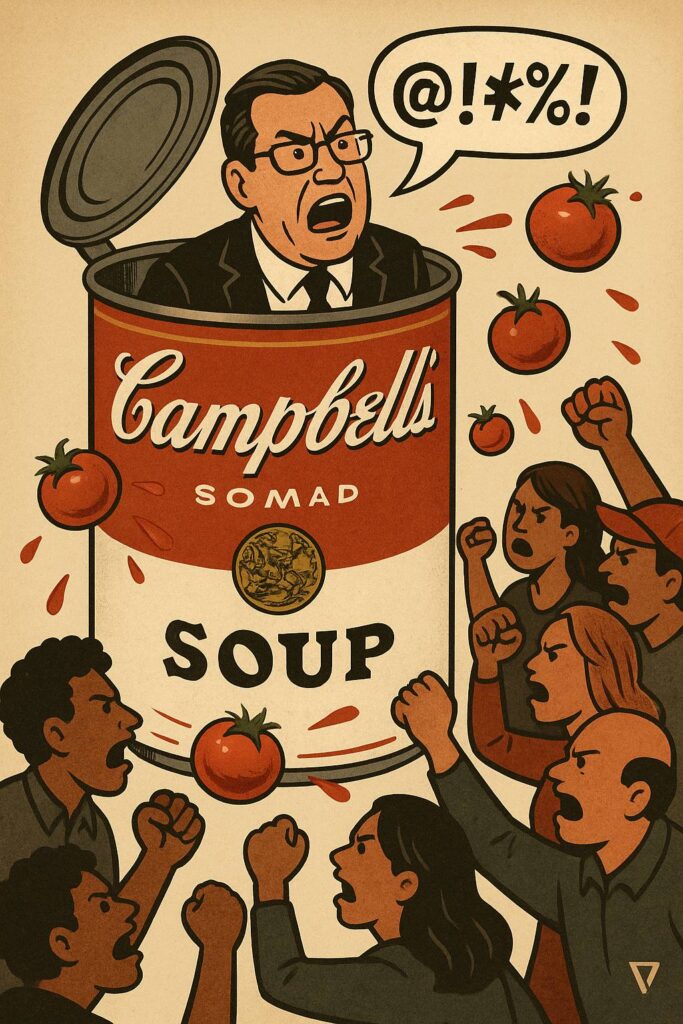
The allegations stem from a lawsuit filed last week in Michigan by Robert Garza, a former employee who says his attempt to report misconduct cost him his job.
What Allegedly Happened: A Timeline of Events
According to the lawsuit:
November 2024
Garza says he met with Bally to discuss compensation. During the meeting — which Garza claims he secretly recorded — Bally allegedly referred to Campbell’s products as “highly processed food” and said they were made for “poor people.”
The remarks didn’t stop there.
Garza claims Bally also made racist statements about Indian workers, allegedly calling them “idiots,” and admitted that he often went to work under the influence of marijuana edibles.
January 10, 2025
Garza says he informed his manager, J.D. Aupperle, that he wanted to report Bally’s comments to human resources. According to the suit, Aupperle neither encouraged the report nor provided guidance on how to proceed.
January 30, 2025
Just weeks later, Garza was terminated.
He is now seeking monetary damages and claims that both Bally and Aupperle were responsible for retaliation leading to his firing.
Campbell’s Response: Swift, Defensive, and Telling
In a statement released Tuesday, Campbell’s did not mince words — but it also did not confirm the recording’s authenticity.
“If the comments on the audio recording were in fact made by Mr. Bally, they are unacceptable,” the company said. “Such language does not reflect our values and the culture of our company.”
The company went a step further, distancing Bally from the brand itself, noting that he worked in IT and “has nothing to do with how we make our food.”
Campbell’s also strongly defended its products, rejecting Bally’s alleged comments as “patently absurd” and reaffirming pride in its workforce, ingredients, and customers.
But for many observers, the damage wasn’t undone by a press release.
Opinion: This Isn’t Just a PR Problem — It’s a Culture Problem
If the allegations are true, what Bally is accused of saying isn’t just offensive — it’s revealing.
Referring to loyal customers as “poor people” while cashing an executive paycheck from the very company that serves them reflects a level of elitism that corporate America keeps getting caught trying to pretend doesn’t exist.
More troubling are the alleged racist remarks. In an era where diversity statements fill corporate websites, claims like these raise an uncomfortable question: How many similar conversations never get recorded?
And then there’s the timing. Garza reports concerns. Weeks later, he’s fired.
Whether or not retaliation can be proven in court, the optics are awful — and workers across industries know exactly how this pattern usually plays out.
Social Media Reaction: Anger, Boycotts, and Receipts
Online reaction has been swift and harsh.
Across X, Facebook, and Reddit, thousands of users are calling Bally’s alleged remarks a betrayal of Campbell’s working-class roots. Some are calling for boycotts. Others are demanding transparency about executive culture inside the company.
Many pointed out the irony: a brand built on affordability and mass appeal allegedly being mocked by someone paid handsomely to help run it.
Others focused on Garza, praising him for coming forward and criticizing the company’s internal reporting structure, asking why employees still feel unsafe reporting misconduct in 2025.
What Happens Next
Campbell’s says the investigation is ongoing. Bally remains on leave. The lawsuit is active. And public trust — once chipped, not shattered — now waits on what facts emerge next.
If the allegations prove true, this won’t just be about one executive’s words. It will be about accountability, internal culture, and whether companies truly stand by the values they promote — or only when a recording forces their hand.
One thing is clear: consumers are listening now. And they’re not just hearing the soup simmer — they’re hearing what’s been said behind closed doors.