


While most headlines are locked in a constant tug-of-war over politics, weather alerts, and whatever social media is arguing about today, a much quieter — and more unsettling — story is unfolding overseas.
It involves something most people here have never heard of: the Nipah virus.
And when Nipah shows up, it tends to grab the attention of health officials for one blunt reason — it kills a staggering number of the people it infects.
This isn’t a bad cold.
It’s not the flu.
And it’s definitely not something doctors shrug off and send you home with rest and fluids.
So what is Nipah, really?
Nipah is a rare but extremely dangerous virus that can jump from animals to humans. Fruit bats are considered its primary natural host, though pigs have also played a role in past outbreaks. When it infects a person, it doesn’t just target one part of the body — it can attack the lungs and the brain.
In some cases, symptoms start out looking fairly ordinary: fever, fatigue, maybe a headache. Then things can escalate quickly. Seizures. Confusion. Loss of consciousness. In the worst cases, coma or death.
Historically, outbreaks have carried fatality rates anywhere from around 40% to as high as 75%. That alone puts Nipah in a category far removed from most viruses people are used to hearing about.
There’s no approved vaccine.
There’s no specific treatment that stops it.
Doctors are limited to supportive care and, frankly, hoping the patient’s body can fight it off.
Why Nipah is back in the conversation
Recently confirmed cases in parts of India were enough to trigger aggressive contact tracing and set off quiet alarm bells across the region. Officials say those cases were contained — but neighboring countries didn’t exactly take that reassurance at face value.
Instead, they rolled out health screenings, traveler monitoring, and other precautionary measures.
That kind of response isn’t accidental. Governments don’t move that fast unless a virus has a reputation that commands respect.
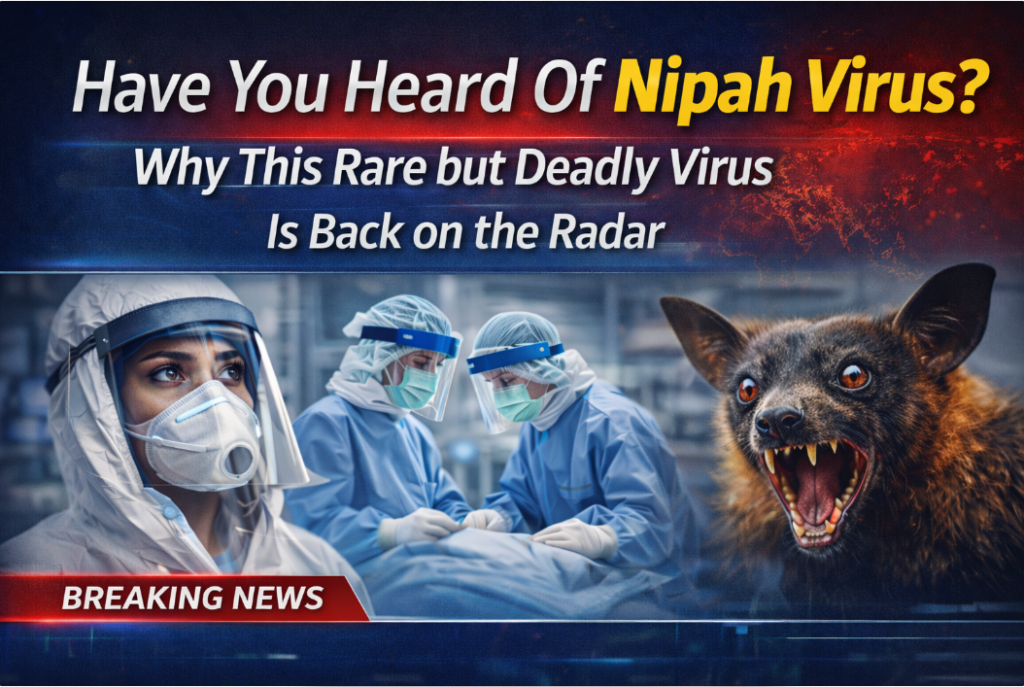
Why this virus makes experts uneasy
To be clear, Nipah isn’t known for spreading like wildfire the way COVID did — and that distinction matters. But it carries a combination of traits that keeps it firmly on global watchlists.
It can spread from person to person, particularly in close-contact situations and healthcare settings.
Symptoms don’t always show up right away, which creates a window where infected people can travel without realizing they’re sick.
When cases turn severe, they tend to deteriorate quickly.
And there’s no medical “backstop” waiting in the wings if things go sideways.
In short, Nipah doesn’t need to infect millions of people to cause serious strain. A relatively small number of severe cases could already put pressure on hospitals.
Could it ever reach the United States?
At this point, there are no known Nipah cases in the U.S.
That’s important to say.
But global travel has changed the way viruses move. Geography isn’t the barrier it once was.
Health officials aren’t sounding panic alarms — but they are watching closely, and that alone says something. The bat species most closely linked to Nipah aren’t native to North America, which reduces the risk of long-term spread here. Still, experts have long pointed out that imported cases are the wildcard, especially when symptoms don’t appear immediately.
Low risk doesn’t mean zero risk.
What happens if someone is infected
Early on, Nipah can look deceptively mild: fever, headache, fatigue, maybe breathing issues. Then, in severe cases, it can turn fast — confusion, seizures, loss of consciousness, and inflammation of the brain.
That unpredictability is part of what makes the virus so dangerous.
Why you’re hearing about it now
This isn’t a prediction of the next pandemic.
It’s not a call to panic.
And it’s definitely not a reason to clear out grocery store shelves.
But it is a reminder.
There are viruses out there that don’t trend on social media, don’t come with catchy names, and don’t politely stay contained forever. Nipah is one of the pathogens global health agencies quietly keep an eye on because if it ever adapts or spreads more efficiently, the consequences would be serious.
The bottom line
Nipah is rare.
It appears to be contained right now.
And the immediate risk to Americans remains low.
But it’s also one of the deadliest viruses known, with no vaccine, no cure, and a history that demands attention — not hysteria, but awareness.
Sometimes the most important stories aren’t the loudest ones. They’re the ones unfolding just far enough away that people stop paying attention.
And those are usually the stories worth watching.