

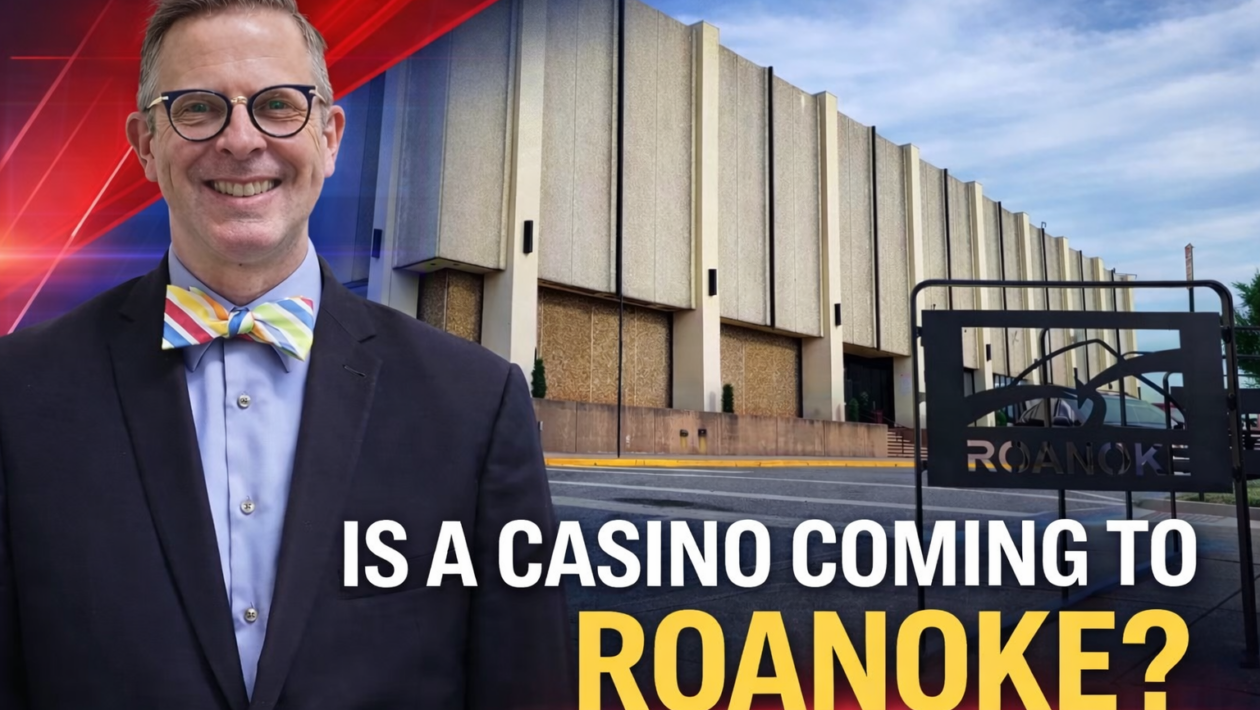
Roanoke may be inching toward one of the most controversial redevelopment conversations the city has seen in decades — and it all centers around the Berglund Center.
City leaders are openly discussing the possibility of transforming the aging civic venue into a large-scale entertainment district, a move supporters say could reshape the city’s economic future. The concept includes major renovations to the Berglund Center, along with new restaurants, a hotel, expanded parking, community gathering spaces, and potentially a casino serving as the district’s anchor attraction.
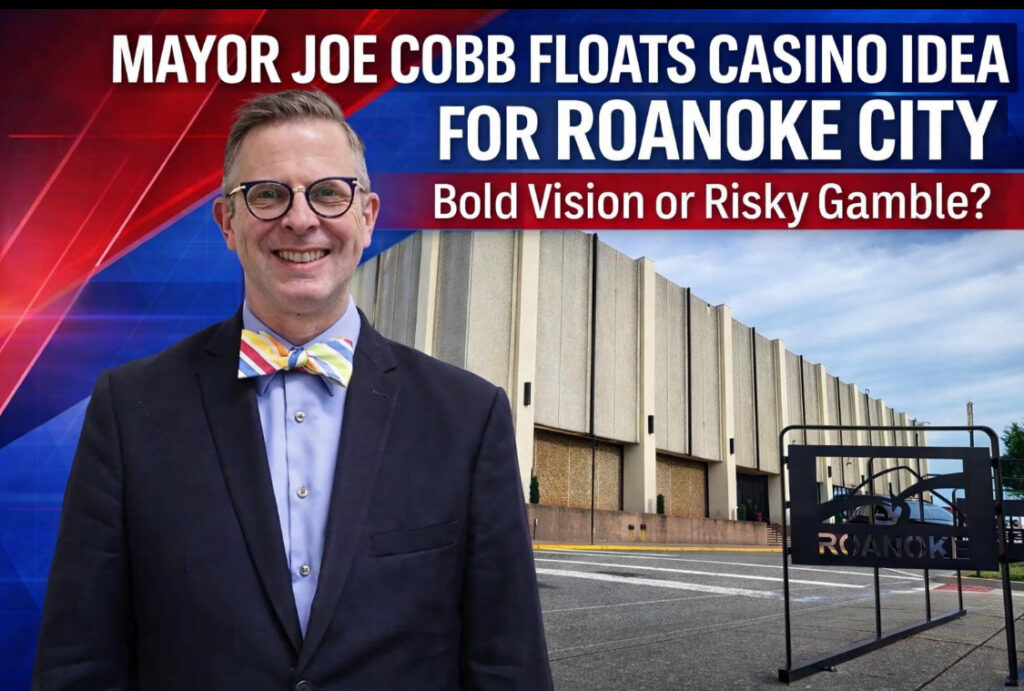
While some see opportunity, others see risk — and that divide is already shaping public reaction.
Under the concept being discussed, the Berglund Center would receive significant upgrades to both the arena and the performing arts theater. The surrounding area would be redesigned to encourage visitors to stay longer, turning single-event trips into full evenings or weekend visits. City leadership believes these improvements could help attract higher-profile entertainment and improve the overall experience for sports fans and concertgoers.
The most debated element of the proposal is the casino.
According to city officials, a private investor approached Roanoke in spring 2025 with interest in placing a casino inside the special events center as the foundation of the entertainment district. The proposal outlines roughly $30 million in improvements to the Berglund Center, paired with an estimated $300 million private investment tied to the casino and supporting amenities.
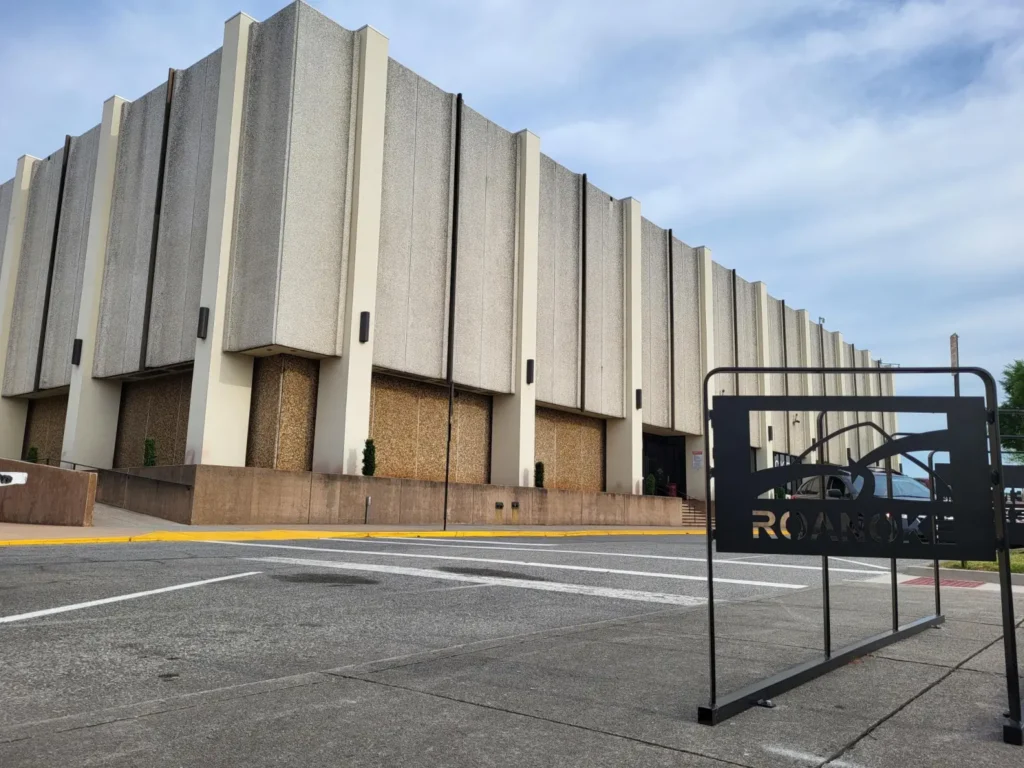
Supporters argue the site’s location makes it uniquely suited for redevelopment. The Berglund Center sits just off Interstate 581 and is close to the airport and passenger rail service, making it one of the most accessible parcels of land in the city. Officials also say the upgrades could enhance the fan experience for local hockey games and make the venue more competitive for touring concerts and regional events.
But opposition to the casino component is vocal — and growing.
Many Roanoke residents, along with people in surrounding communities, have raised concerns that a casino would ultimately make its money off local and regional residents rather than out-of-town visitors. Critics argue that casinos often draw disproportionately from lower-income populations, increasing financial strain, debt, and long-term poverty in areas already facing economic challenges. For these residents, the concern isn’t just about gambling — it’s about whether the economic gains would truly outweigh the social costs.
Job creation is frequently cited as a benefit. City leadership estimates the project could generate more than 900 permanent jobs once operational, in addition to construction employment. Many of those positions are projected to pay annual salaries in the mid-$50,000 to $60,000 range. The private investor has also proposed a philanthropic component focused on nearby neighborhoods and community-wide initiatives, including restorative and reparative projects.
Even so, critics remain skeptical, questioning whether promised wages and community investments would offset potential increases in addiction-related issues, financial hardship, and demands on social services.
There are also significant legal and procedural hurdles before any casino could become a reality.
State lawmakers would need to grant Roanoke permission to be considered as a casino site. If that approval were granted, the city would then be required to hold a local referendum, allowing registered voters to decide whether a casino should be part of the entertainment district.
City leadership acknowledges that public response is mixed. Some residents view the proposal as a chance to bring new life to an aging venue, generate tax revenue, and create jobs. Others worry it could deepen existing economic struggles by profiting from local losses rather than regional growth.
Supporters of the concept point to Roanoke’s past, noting that several major developments were once viewed as risky or unpopular before ultimately shaping the city’s modern landscape. Investments in biomedical research, medical education, healthcare expansion, downtown revitalization, and cultural infrastructure all faced early resistance before becoming cornerstones of economic growth.
The argument being made now is that Roanoke’s progress has often depended on exploring new ideas rather than dismissing them outright — while opponents counter that not every bold idea is the right one.
For now, the entertainment district remains just that: a proposal. City leaders say the idea deserves public debate, careful evaluation, and transparency as discussions continue.
Whether the Berglund Center becomes a revitalized entertainment hub or remains a civic venue with a complicated future will ultimately be decided by state lawmakers — and then by Roanoke voters themselves.
One thing is already clear: this is not a simple development plan, and the outcome could shape Roanoke’s economic and social landscape for years to come.