

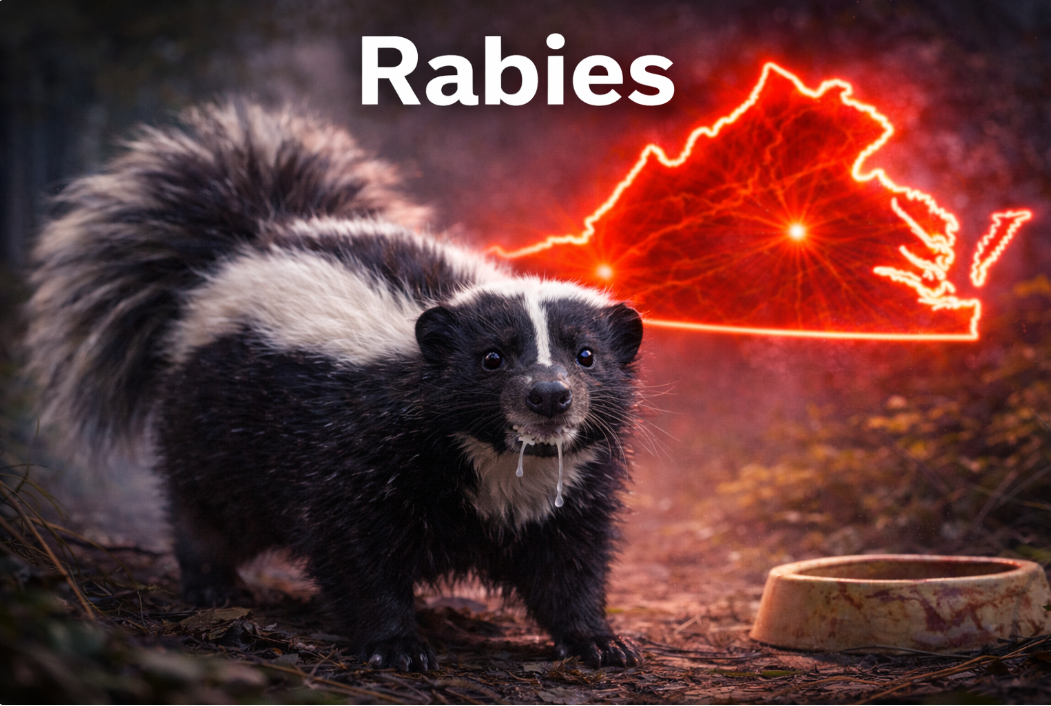
Botetourt County health officials are urging residents to remain cautious after a skunk tested positive for rabies earlier this month.
According to the Virginia Department of Public Health, the animal was collected on January 1, 2026, in the area near Loope Lane and Wheatland Road. The confirmed case has triggered a public alert as a reminder that rabies remains a serious and ongoing risk in the region.
Why Rabies Is a Serious Concern
Rabies is a viral disease that attacks the nervous system and is almost always fatal once symptoms appear. While domestic animals can be protected through vaccination, wildlife such as skunks, raccoons, foxes, and bats are common carriers in Virginia.
Humans and pets are considered exposed to rabies when:
- A bite or scratch allows saliva from an infected animal to enter broken skin
- Saliva or nervous system tissue enters the eyes, mouth, or nose
Even minor contact can be dangerous if left untreated.
State Law and Pet Vaccinations
Virginia law requires pet owners to keep rabies vaccinations current for dogs and cats that are four months of age or older. Officials stress that vaccinations are the most effective way to protect both animals and people from exposure.
Unvaccinated pets that come into contact with a rabid animal may face quarantine or other serious consequences.
What Residents Should Do
Health officials are reminding the public to never approach or attempt to handle wild or unfamiliar animals, especially those acting aggressively, disoriented, or unusually tame.
Any suspected rabies exposure or animal bite should be reported immediately to the RCAHD Environmental Health Division at 540-204-9764.
To reduce the risk of rabies exposure, residents are encouraged to:
- Avoid contact with wild animals and unknown pets
- Report injured, aggressive, or strange animal behavior to local animal control
- Keep dogs, cats, and ferrets up to date on rabies vaccinations
- Wash any bite or scratch thoroughly with soap and water
- Contact a doctor and local health officials immediately if exposure is suspected
If a pet is exposed to a potentially rabid animal, owners should contact a veterinarian and animal control right away.
Staying Alert
Officials say confirmed rabies cases like this one serve as an important reminder that rabies is still present in the region, particularly in wildlife. Awareness, vaccination, and prompt reporting remain key to preventing serious illness or loss of life.
Residents in the Loope Lane and Wheatland Road area — and throughout Botetourt County — are urged to stay vigilant and report any concerning animal activity.