

By Vinton Voice
RICHMOND — A series of bills moving through the Virginia General Assembly this week could bring additional changes to how the Commonwealth handles Confederate monuments, organizations and state symbols.
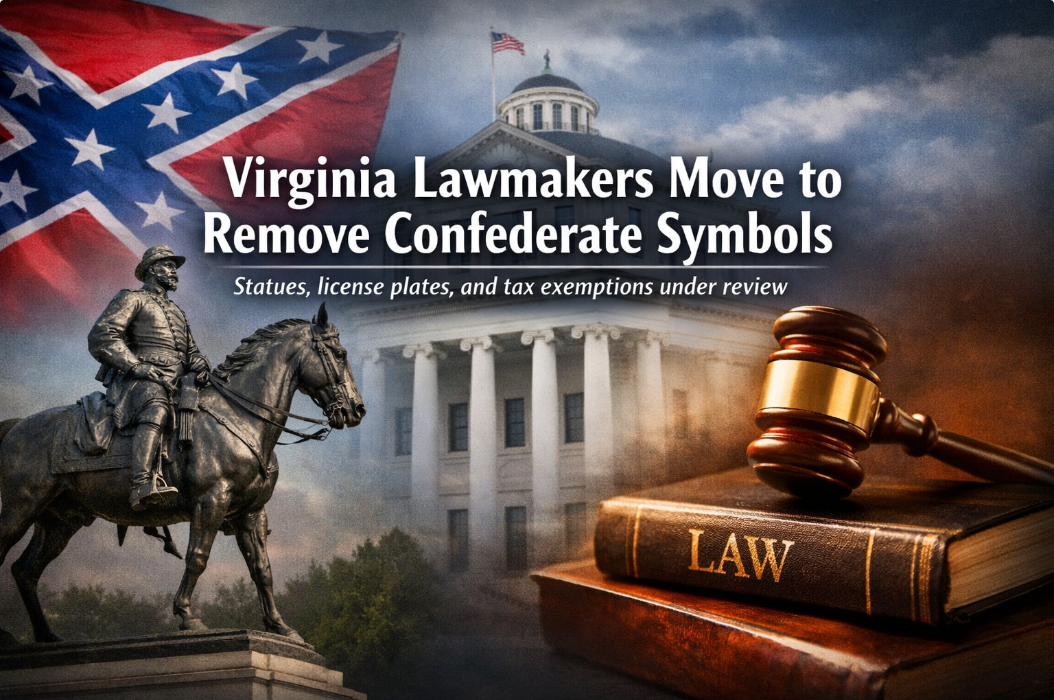
Lawmakers in both the House and Senate advanced measures aimed at removing certain statues from Capitol Square, ending tax exemptions for Confederate-linked groups, and eliminating specialty license plates tied to Confederate imagery.
Supporters say the effort is about closing the chapter on what they describe as a painful and divisive part of Virginia’s history. Opponents argue the moves unfairly target heritage organizations and descendants of Civil War veterans.
Capitol Square Statues Targeted
The Virginia Senate passed legislation that would remove three remaining Confederate statues located in Capitol Square, including one of Stonewall Jackson.
Supporters of the measure say the statues send the wrong message about the state’s values.
Delegate Alex Askew, one of the lawmakers backing the broader push, has said the continued presence of Confederate symbols suggests to some Virginians that the state has not fully moved forward.
For many African Americans, supporters argue, those monuments are reminders of slavery and resistance to civil rights.
Tax Exemptions for Confederate Organizations
The House has passed legislation that would remove tax-exempt status from certain Confederate-affiliated organizations, including the United Daughters of the Confederacy.
Askew, who authored that bill, says the goal is to ensure organizations that celebrate the Confederacy are not receiving state-backed privileges.
In response, the United Daughters of the Confederacy issued a statement opposing the bill, calling it discriminatory toward descendants of veterans who served in the Civil War.
The organization maintains it is a philanthropic group focused on historical preservation, not political advocacy.
Confederate License Plates Under Review
Another proposal would prevent Virginia from issuing specialty license plates honoring Robert E. Lee and the Sons of Confederate Veterans.
Supporters argue that state-issued plates should not feature Confederate imagery.
Opponents testified that the plates represent heritage rather than hate and that removing them would amount to government discrimination.
The debate mirrors conversations that have unfolded across Virginia in recent years, including monument removals in Richmond and other cities.
How This Debate Connects to Roanoke and Vinton
While much of the focus has centered on Richmond, conversations around Confederate symbols have surfaced periodically here in the Roanoke Valley as well.
In recent years, monument removals and renaming efforts across Virginia have sparked discussion locally about how history should be represented in public spaces. Some residents in Roanoke and Vinton say removing Confederate imagery reflects a changing state and a broader effort toward inclusion. Others argue that historic statues and symbols — even controversial ones — should remain as part of the historical record.
As Richmond lawmakers push forward with new legislation, those statewide decisions could influence how future local debates unfold. Whether through public monuments, specialty license plates seen on area roads, or state-recognized organizations, the issue continues to touch communities across Southwest Virginia.

State Song Also Addressed
In addition to monument and organization measures, the Senate unanimously approved a bill to remove a controversial song as Virginia’s official song emeritus.
The broader effort signals that state lawmakers are continuing to reexamine how Virginia’s past is reflected in public spaces and official designations.
What Comes Next
The legislation must continue through the General Assembly process before becoming law.
As the debate moves forward, Virginians on both sides of the issue are making their voices heard — some calling the changes long overdue, others urging lawmakers not to remove what they see as important historical markers.
The discussion over how Virginia remembers its past is far from settled.