

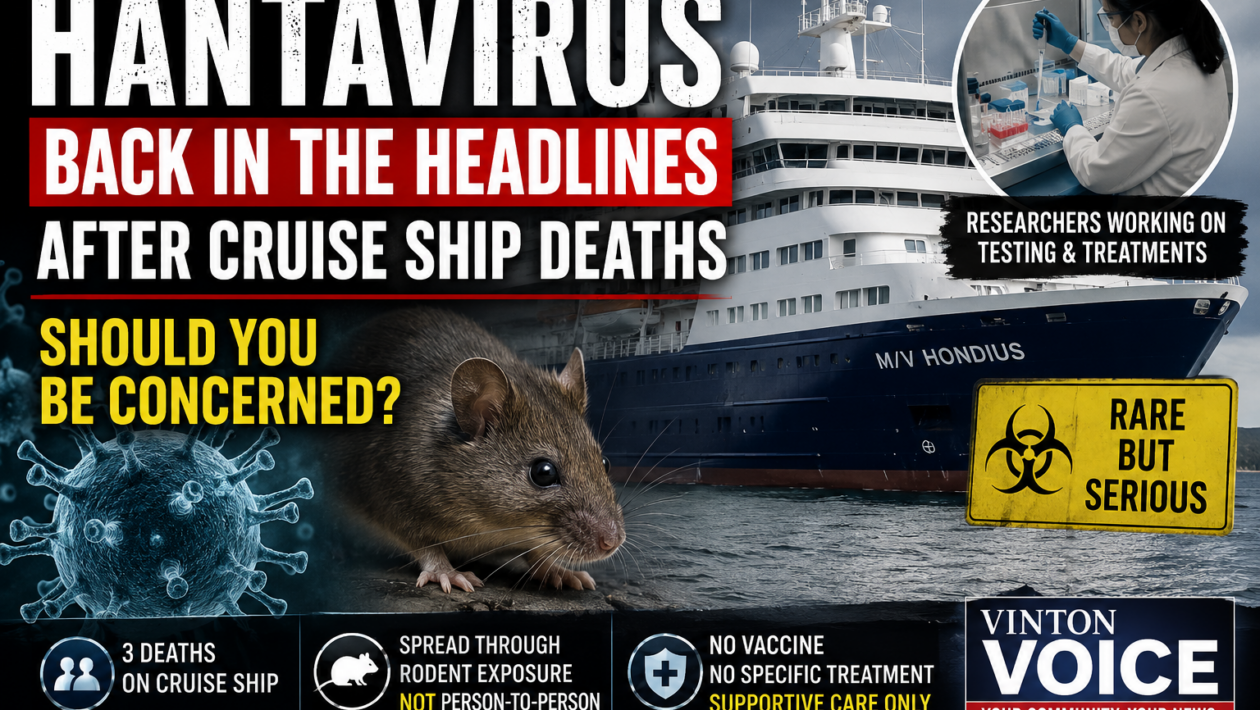
Should You Be Concerned?
A rare virus that most people never think about is suddenly back in the news.
Hantavirus is getting attention after three people died aboard the M/V Hondius cruise ship, and now health officials in several states are monitoring travelers who may have been exposed.
The situation sounds serious, but officials continue to say the risk to the general public remains low.
So what’s really going on here?
What Is Hantavirus?
Hantavirus isn’t new. It has been around for decades and shows up in isolated cases from time to time.
It spreads through contact with rodents, mainly:
- Breathing in particles from droppings
- Exposure to urine or saliva
- Dust in enclosed or poorly ventilated spaces
This is not something that spreads easily between people, which is a big reason health officials are not treating this like a widespread outbreak.
Why You’re Hearing About It Now
A few things came together at once.
First, the cruise ship setting. Anytime something happens on a ship, it gets attention fast. People remember how quickly illnesses spread in close quarters.
Second, the timing. Since COVID, anything involving a virus tends to get more coverage and more reaction.
And third, the severity. Hantavirus can be dangerous if someone gets it, even though cases are rare.
A Recent High-Profile Case
Earlier this year, hantavirus was also linked to the death of Betsy Arakawa, the wife of actor Gene Hackman.
She died at their home in New Mexico, and investigators later noted possible rodent exposure on the property.
That case brought the virus back into public conversation, even before the cruise ship incident.
Is This Something Like COVID?
Right now, experts say no.
Hantavirus behaves very differently:
- It does not spread easily from person to person
- Cases are usually tied to specific environments
- There is no sign of widespread transmission
That makes it far less likely to turn into a large-scale public health event.
Is There a Treatment?
There is no vaccine for hantavirus.
There is also no specific treatment that targets the virus directly. Doctors focus on supportive care, especially in serious cases.
Researchers are working on faster testing and possible treatments, but those are still in development.
So Should You Be Worried?
For most people, the answer is no.
The virus is serious, but exposure is uncommon and usually tied to specific conditions involving rodents.
Simple precautions still go a long way:
- Avoid contact with rodent droppings
- Be careful in enclosed spaces like sheds or cabins
- Keep living areas clean and sealed
The Bigger Picture
Stories like this tend to spread quickly, especially when they involve a virus, a cruise ship, and confirmed deaths.
That doesn’t mean the risk has suddenly changed. It just means more people are paying attention.
Hantavirus is real and can be dangerous, but it remains rare and difficult to catch.
Health officials are monitoring the situation, but there is no indication this is turning into something widespread.