

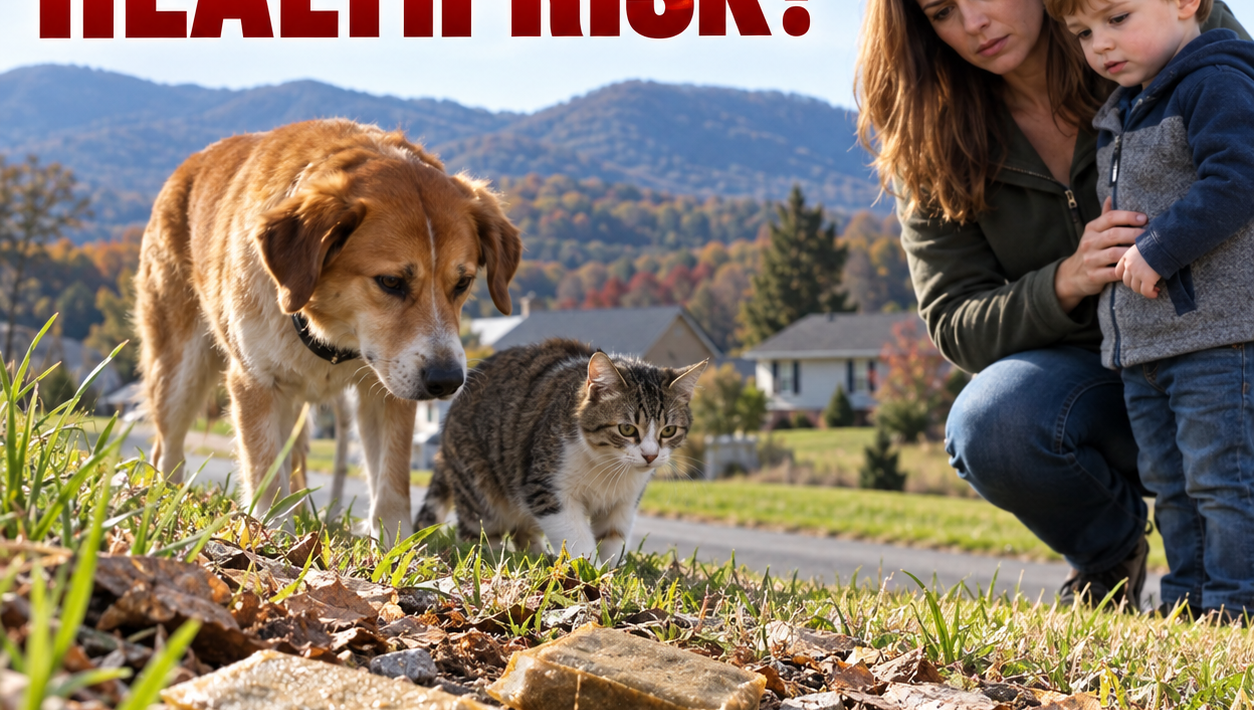
Thousands of rabies vaccine packets will soon be dropped across Southwest Virginia, and while the program is considered safe, health officials say residents should avoid direct contact with the liquid inside damaged or leaking baits.
The U.S. Department of Agriculture plans to distribute approximately 271,000 oral rabies vaccine baits across Southwest Virginia beginning in mid-October as part of an effort to vaccinate raccoons and slow the spread of rabies.
Most of the baits will be dropped from fixed-wing aircraft across a roughly 5,260-square-kilometer area, while helicopters will be used around larger towns and developed areas.
The baits themselves are considered very low risk when intact. However, there is an important health warning residents should know about if a packet is punctured, crushed or leaking.
The vaccine used in the baits, known as RABORAL V-RG, contains a live genetically modified vaccinia virus. Vaccinia is related to the virus historically used in smallpox vaccines.
The vaccine cannot give a person or animal rabies.
However, direct exposure to the liquid vaccine inside a damaged packet can, in rare cases, cause a vaccinia infection in humans.
Health concerns are greatest if the liquid gets into a cut, scratch or other broken skin, or comes into contact with the eyes, mouth or nose.
People with weakened immune systems, those taking immunosuppressive medications or steroids, people with certain serious skin conditions such as eczema, pregnant women and young children may require additional caution.
The Centers for Disease Control and Prevention has previously documented rare human infections involving rabies vaccine bait liquid entering damaged skin.
In one reported case, an immunocompromised woman developed a vaccinia infection after vaccine liquid from a bait punctured by her dog came into contact with scratches on her hand. She required medical treatment.
Such cases are extremely rare compared with the millions of oral rabies vaccine baits that have been distributed, but public health agencies still advise people not to unnecessarily handle the packets.
What should you do if you find one?
Residents should generally leave intact baits alone and tell children not to pick them up.
If a bait must be moved, officials recommend using gloves or another barrier instead of bare hands.
Pet owners should also avoid reaching into a dog’s mouth to retrieve a bait. The vaccine is generally considered safe for dogs and cats, although eating several baits may cause temporary stomach upset.
If the liquid inside a damaged packet gets on your skin, wash the area thoroughly with soap and warm water.
If the liquid gets into your eyes, mouth, nose or broken skin, contact a healthcare provider or public health agency for guidance.
A toll-free number is printed on the bait for exposure questions:
1-877-722-6725
The bait distribution is expected to include Bland County, Carroll County, Chilhowie, Damascus, Fort Chiswell, Giles County, Glade Spring, Grayson County, Marion, Pulaski County, Rural Retreat, Saltville, Smyth County, Tazewell, Washington County, Wythe County and Wytheville.
The important distinction is simple: an intact bait is considered very low risk. The health concern involves direct exposure to the live vaccine liquid inside a damaged or leaking packet.