

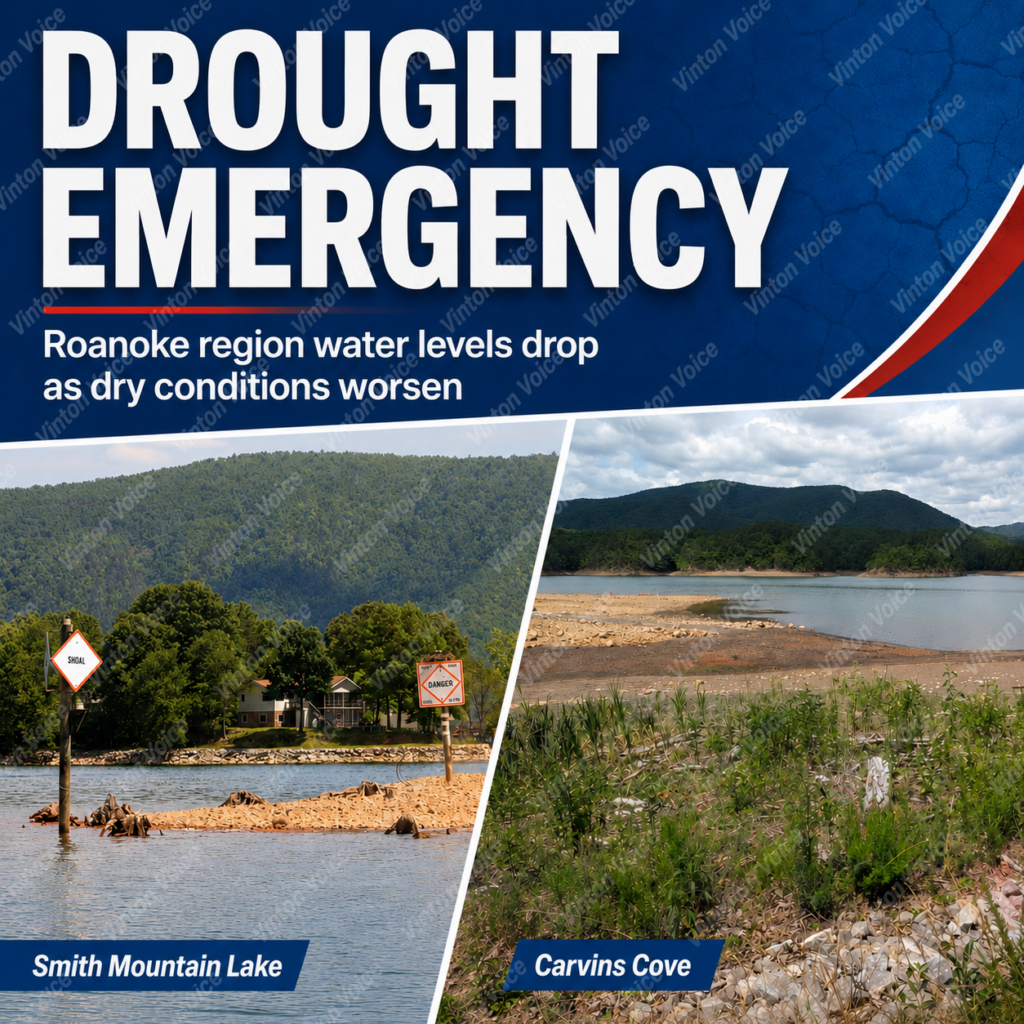
ROANOKE, Va. — The Roanoke Valley and a large portion of Southside Virginia have now reached drought emergency status after months of unusually dry weather left streams, groundwater wells and reservoirs well below normal levels.
The Roanoke Drought Evaluation Region has received only about 57% of its normal rainfall for this point in the year, according to information released Wednesday by Gov. Abigail Spanberger’s office. Statewide rainfall is averaging approximately 7.8 inches below normal, making this Virginia’s second-driest water year on record.
The emergency-status region includes Roanoke, Bedford, Campbell, Charlotte, Franklin, Halifax, Henry, Mecklenburg, Patrick and Pittsylvania counties, along with the cities of Roanoke, Salem, Danville and Martinsville.
State officials emphasized that the designation does not yet mean mandatory restrictions are in place across the region. However, local and regional leaders are reviewing conditions and determining what additional steps may become necessary if rainfall and water supplies do not improve.
Local reservoirs continue to decline
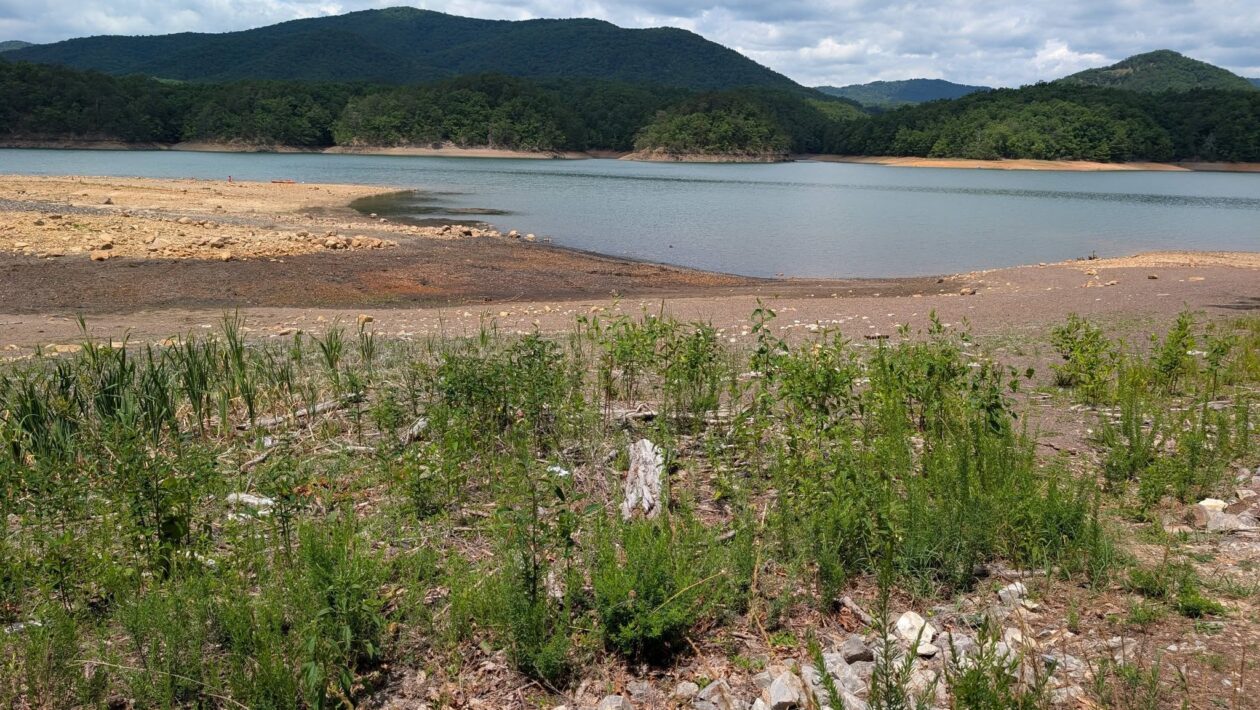
The drought is becoming increasingly visible at the region’s major water sources.
Carvins Cove, one of the Roanoke Valley’s primary drinking-water reservoirs, has been steadily falling during the prolonged dry period. The Western Virginia Water Authority reports reservoir levels daily and has already placed customers under voluntary conservation measures.
The Authority’s drought plan indicates that Stage 2 mandatory conservation measures could be triggered if Carvins Cove falls more than 20 feet below full pond during the summer. Those restrictions could include limits on outdoor watering, vehicle washing and the cleaning of exterior surfaces.
Carvins Cove holds approximately 6.42 billion gallons when full, while Spring Hollow Reservoir can store about 3.2 billion gallons. The Water Authority says the reservoirs normally hold roughly two years of water at current demand, but continued dry weather increases pressure on those reserves.
Smith Mountain Lake and the John H. Kerr Reservoir have also fallen below their normal seasonal levels, while waterways across the James, New, Meherrin and Roanoke River watersheds continue to experience unusually low flows. State officials said some groundwater monitoring wells are recording provisional daily lows and may require an extended period of consistent rainfall to recover.
What “drought emergency status” means
Virginia monitors drought conditions using several indicators, including rainfall, streamflow, groundwater and reservoir levels. The Virginia Department of Environmental Quality evaluates those conditions across 13 drought regions and classifies them at increasing levels of concern.
The state’s Drought Monitoring Task Force recommended placing the Roanoke region in emergency status during its July 7 meeting. Much of the rest of Virginia remains under either drought-watch or drought-warning conditions.
A regional emergency status is an indication that water conditions have become severe. A separate formal drought emergency declaration could be issued later if conditions continue deteriorating. Such a declaration could lead to mandatory restrictions on nonessential water use, including irrigation of lawns, golf courses and athletic fields.
Residents urged to conserve now
Gov. Spanberger and regional water officials are encouraging residents and businesses to reduce unnecessary water use before mandatory restrictions become necessary.
Suggested conservation steps include:
- Watering lawns and gardens only during the early morning or evening.
- Postponing unnecessary vehicle washing.
- Repairing leaking faucets, pipes and toilets.
- Turning off running water while brushing teeth or shaving.
- Using full loads in dishwashers and washing machines.
- Avoiding the use of drinking water to clean sidewalks and driveways.
The Western Virginia Water Authority says voluntary conservation is important because reducing demand now can help preserve supplies for drinking water, sanitation and fire protection if drought conditions continue through the summer.
Significant rain will be needed
A few scattered thunderstorms may provide short-term relief, but state officials warn that isolated rainfall will not be enough to restore groundwater, streamflow and reservoir levels.
The region will likely need a prolonged period of widespread, soaking rain before water conditions return to normal.
For now, there are no broad mandatory water restrictions across the Roanoke Valley. However, residents are being asked to treat the situation seriously and begin conserving before stronger measures become necessary.