

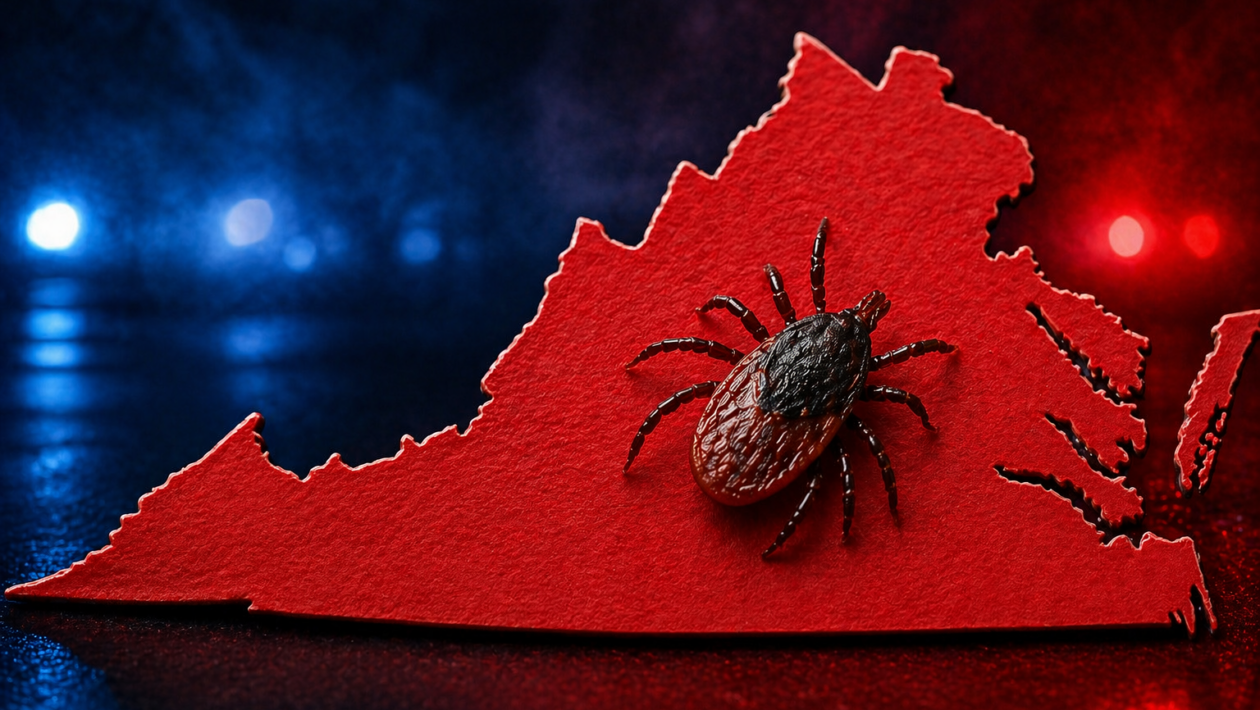
As temperatures rise across Virginia, so does a growing health concern that many people underestimate — tick bites.
Health officials are now warning that 2026 is shaping up to be one of the worst seasons in years for tick activity, with new data showing a sharp increase in emergency room visits tied to bites.
Tick Bites Reach Highest Levels in Nearly a Decade
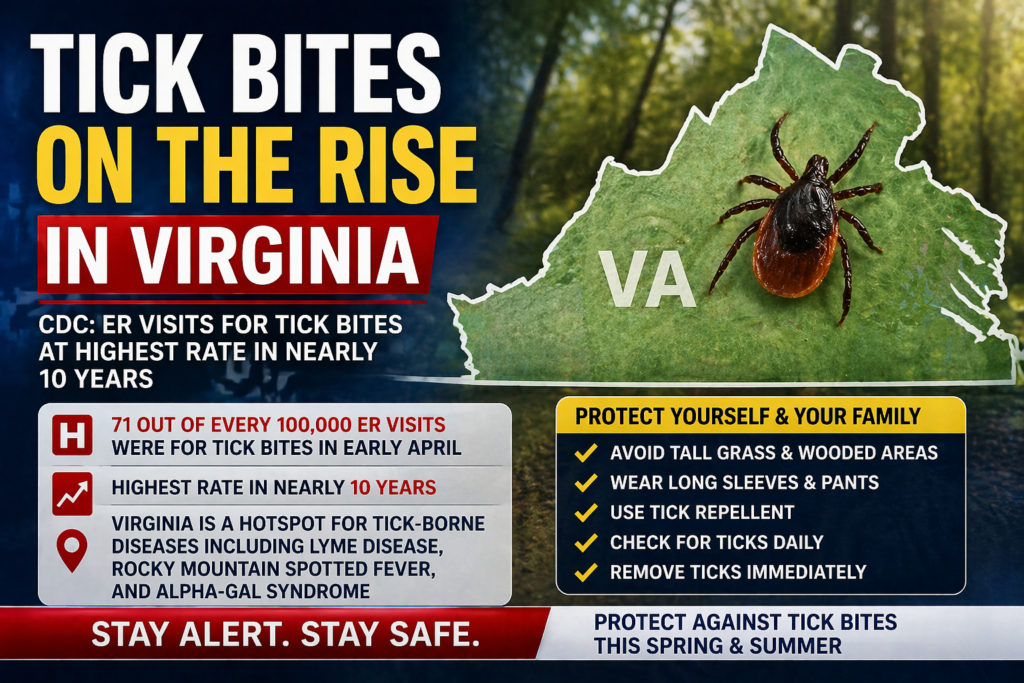
According to the Centers for Disease Control and Prevention (CDC), tick-related ER visits have surged to the highest rate in nearly 10 years.
During the second week of April alone, approximately 71 out of every 100,000 emergency room visits were linked to tick bites — a number that has health experts paying close attention.
While the Northeast is seeing the biggest spike, Virginia — especially Southwest Virginia — remains a major hotspot for tick exposure and tick-borne illness.
Why Virginia Is a Tick Hotspot
Virginia’s climate and landscape make it an ideal environment for ticks to thrive.
From wooded trails to backyard grass, ticks are commonly found in:
- Tall grass and brush
- Leaf litter and wooded areas
- Parks, hiking trails, and even residential yards
In recent years, Virginia has consistently ranked among the states with high rates of tick-borne diseases, including:
- Lyme disease
- Rocky Mountain spotted fever
- Alpha-gal syndrome (a red meat allergy caused by tick bites)
Many cases go undetected at first because tick bites are often painless and easy to miss.
The Real Danger: Tick-Borne Illnesses
Ticks are more than just a nuisance — they can carry bacteria, viruses, and parasites that can lead to serious health issues.
Some of the most concerning conditions include:
Lyme Disease
The most common tick-borne illness in the U.S., often causing fatigue, fever, joint pain, and the well-known “bullseye” rash.
Rocky Mountain Spotted Fever
A potentially severe illness that can become life-threatening if not treated quickly.
Alpha-Gal Syndrome
A growing concern in Virginia, this condition can cause a sudden allergy to red meat after a tick bite.
Why 2026 Could Be a Bad Tick Year
Experts say several factors are contributing to the increase in tick activity:
- Milder winters allowing ticks to survive longer
- Early spring temperatures accelerating activity
- Growing wildlife populations (like deer and rodents) that carry ticks
This means ticks are active earlier in the year and staying active longer than usual.
How to Protect Yourself and Your Family
The CDC recommends several simple but effective steps to reduce your risk:
- Avoid wooded and brushy areas with high grass
- Wear long sleeves and pants when outdoors
- Use EPA-approved tick repellents (like DEET)
- Perform daily tick checks on yourself, children, and pets
- Shower soon after being outdoors
- Remove ticks immediately using fine-tipped tweezers
Don’t Forget About Pets
Dogs and outdoor pets are especially vulnerable and can bring ticks into your home.
Make sure to:
- Use veterinarian-recommended tick prevention
- Check pets daily after being outside
- Keep grass trimmed around your home
With spring in full swing and summer just around the corner, tick awareness is more important than ever in Virginia.
Whether you’re hiking, working outside, or just relaxing in your backyard, taking a few precautions can make a big difference.
As health officials continue to monitor the rise in cases, one thing is clear:
👉 Ticks are not just a seasonal annoyance — they’re a growing public health concern.